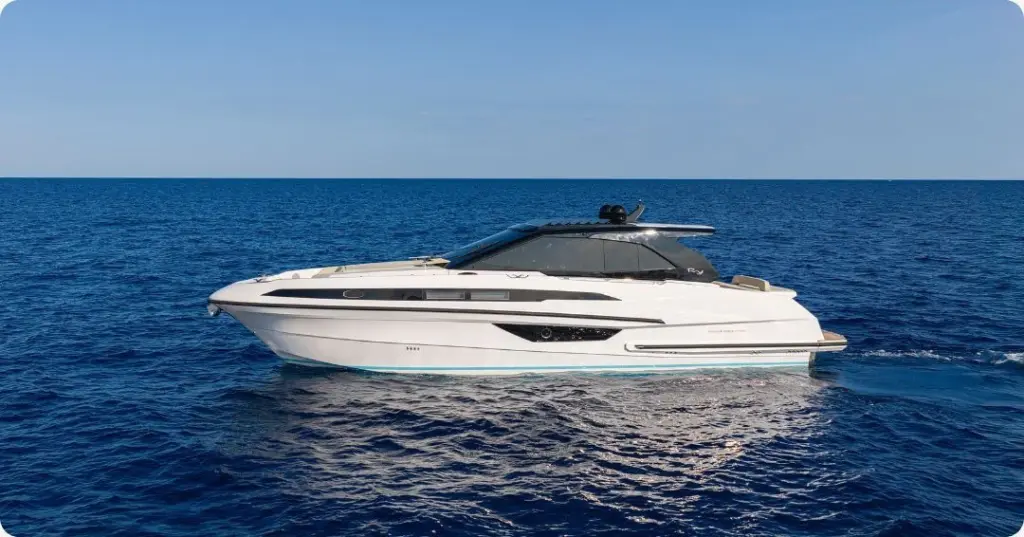
There are products that shout their value from the marina — sleek outboards, polished propellers, digital wonders – and then there are the unsung heroes that sailors only notice when things go wrong.
The PSS shaft seal belongs squarely in the latter category: small, well-engineered and utterly crucial.
It has been a star of Power Equipment’s quality marine components for a long time!
For four decades, the PSS, (Packless Sealing System), has rewritten the rules for how propeller shafts work through a hull, swapping wet bilges and endless gland fiddling for dry cabins and long service intervals.
Founded in 1981, the company’s single-minded focus on face-seal engineering has made the PSS the default dripless solution for recreational and commercial craft around the world.
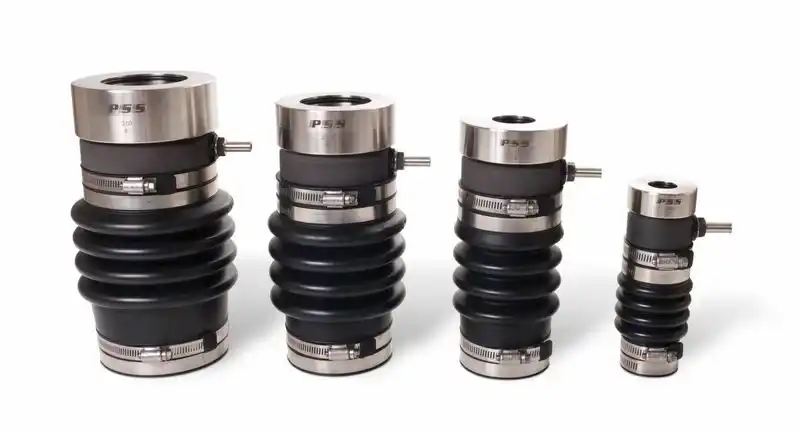
What is a PSS Shaft Seal?
Put simply, it’s a mechanical face seal that creates a watertight barrier between a spinning stainless steel rotor mounted to the shaft and a stationary carbon/graphite facing attached to flexible bellows on the stern tube.
Unlike traditional packing, (like the old-school braided stuffing box), the mating stainless and graphite faces of the PSS, when correctly lapped and lubricated by a small feed of raw water, prevent water passage without shaft-contact wear or continual adjustments associated with packing.
The result? A bone-dry bilge, reduced shaft wear, and maintenance that’s scheduled in years rather than weeks.
A seal for every boat Over time PSS has evolved into a range of products that suit everything from trailerable power boats to long-range commercial hulls.
he PSS lineup that can be found through Power Equipment and its authorised dealers include everything from the Type A PSS through to the equally innovative PSS rudder seal. They have pretty much every boating application covered.
The original PSS Type A, (for smaller shafts), caters for power and sail boats with shafts up to 3-¾”. It is the most popular of the PSS models and can be found in literally hundreds of thousands of craft around the world. It uses a nitrile rubber bellow and 316 stainless rotor.
The PSS PRO, (an upgraded, heavy-duty version), utilises a similar but upgraded four-ply aramid/silicone construction bellows with flurosilicone outer to withstand harsher conditions and fuel/oil spillage resistance. The PSS PRO is available in shaft sizes from ¾” through to 3-¾”.
Handling the serious shaft sizes from 4” through 6-½” is the job of the larger PSS Type B, designed for higher-load applications. It has dual injected carbon stators and upgraded components like the PSS PRO.
Why PSS works — engineering details that matter
The technical elegance of PSS is in the separation of rotating and static parts. Most importantly, it is the choice of materials that is the reason it works so well.
The rotor is stainless steel, (with Nitronic 50 upgrade available for extreme corrosion resistance), and the stator is a lapped carbon-graphite face — a combination chosen because the static carbon face and the rotating metal face can maintain an ultra-fine contact while enduring the sliding and thermal stresses of a spinning shaft.
Two O-rings secure the rotor to the shaft but do not rotate on the shaft, avoiding the continuous wear packing glands impose.
A small raw-water feed cools and lubricates the faces on higher-speed installations; bellows isolate the stator from axial movement and hull flexing. This delivers both longevity and low-maintenance performance—qualities boatowners prize more than marketing hyperbole.
Safety, standards and global acceptance
PSS seals are not just popular—they’re certified.
Shipyards and classification-minded owners looking for approvals from marine classification societies and engineering certifiers know that PSS has secured recognition from agencies and registrars around the world, including Bureau Veritas, ABS and RINA certifications.
That broad acceptance underpins its place as standard equipment in many production and custom builds and as a trusted retrofit for older vessels.
A practical advantage: maintenance and retrofit friendliness
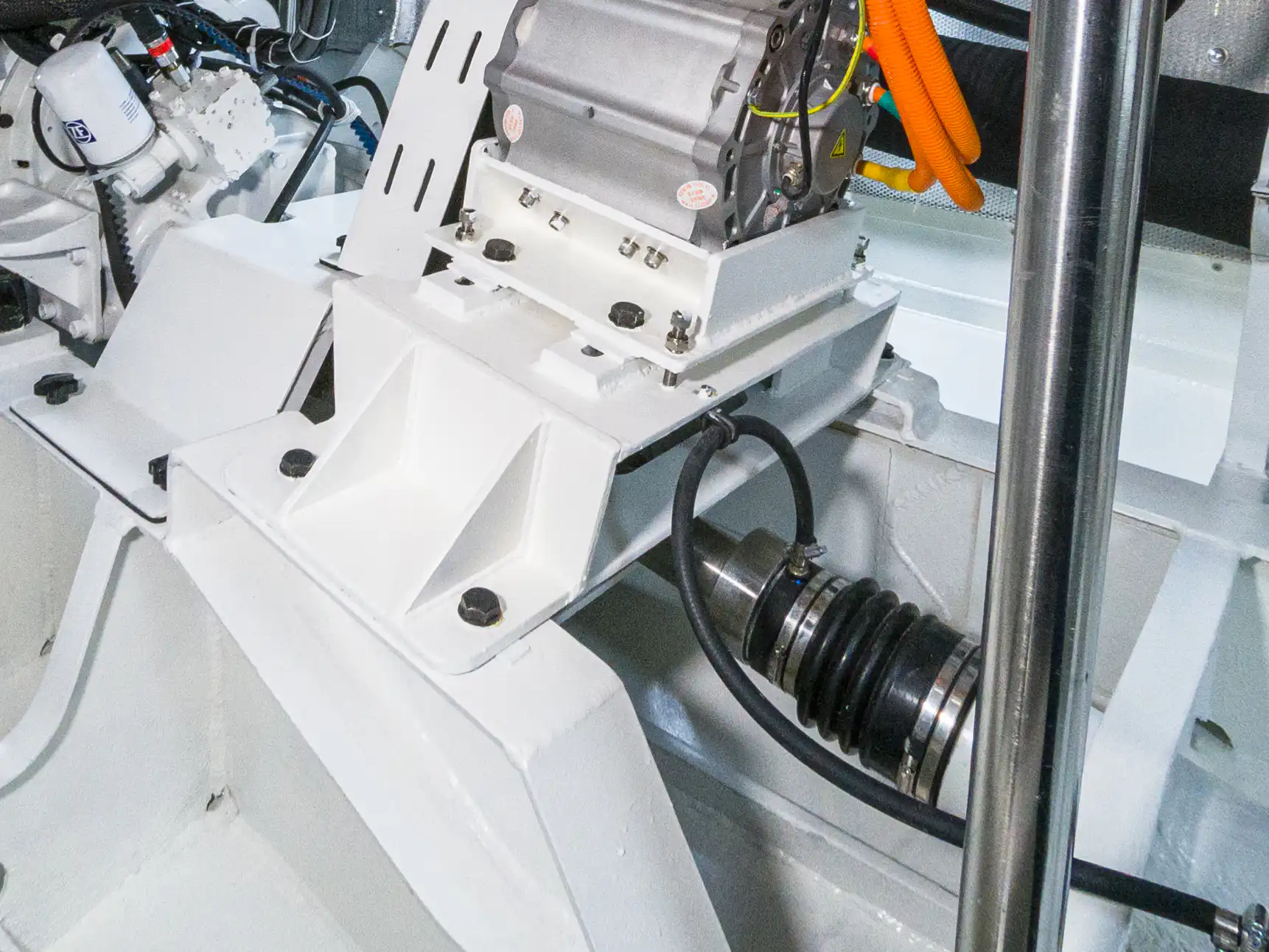
Practicality is another strength of the PSS seal. These units are designed to be retrofitable onto existing stern tubes without extensive reworks that stuffing boxes often demand.
Routine maintenance is straightforward: the face components are replaceable, bellows and clamps are serviceable and kits are widely available through Power Equipment, its dealers and a global PSS dealer network.
This accessibility reinforces the PSS’s long-life argument. With replacement parts and service intervals predictable, in virtually all cases it’s less costly over a vessel’s life than recurring packing changes and shaft wear repairs.
From niche innovator to part of sealing family
Power Equipment has enjoyed a decades-long association with PSS and is honoured to include its range with the premium marine products it distributes.
Says Justin Romesburg, Vice President of PSS Seal LLC: “We’re proud to have Power Equipment representing PSS in Australia and New Zealand.
“Their extensive reach, first-class organization, and shared values align perfectly with PSS Seal and the wider AESSEAL Group, ensuring exceptional service and support across both regions.”
PSS’s journey from a niche, Seattle-based innovator to a globally distributed product has included strategic partnerships and ownership changes that expand engineering and manufacturing reach. Recent corporate moves, including acquisition by a larger engineering group known for mechanical-seal expertise, signal both the maturity of the technology and a pathway for ongoing product refinement, (and even further industrial application).
For owners and ship yards, that’s reassurance.
PSS isn’t a passing fad, it’s a sealed technology with a track record and the backing to continue crossing seas and oceans reliably into the future. The bottom line is this: A shaft seal lives in a small, confined space—but its consequences ripple through every corner of a boat’s operation.
Bilge dryness, propulsion reliability, and long-term cost of ownership are all the guarantees of its proven design.
PSS brought mechanical-face sealing into mainstream marine use by solving real-world headaches with a compact, robust, and serviceable component.
For many skippers, the PSS is the component they didn’t know they needed. But once you get one, we guarantee you’ll never go back to stuffing box towels, drips, and endless adjustment again.
Find out more about the PSS Shaft Seal range, its capabilities and benefits.