When it comes to improving your vessel’s performance, efficiency, and handling, your propeller choice matters more than you might think. Whether you’re sailing or under power, understanding the difference between folding and feathering propellers can help you make a smarter, more cost-effective decision.
Folding vs Feathering Propellers
What’s the Difference?
At a glance, both propeller types aim to reduce drag under sail, but they achieve it in very different ways.
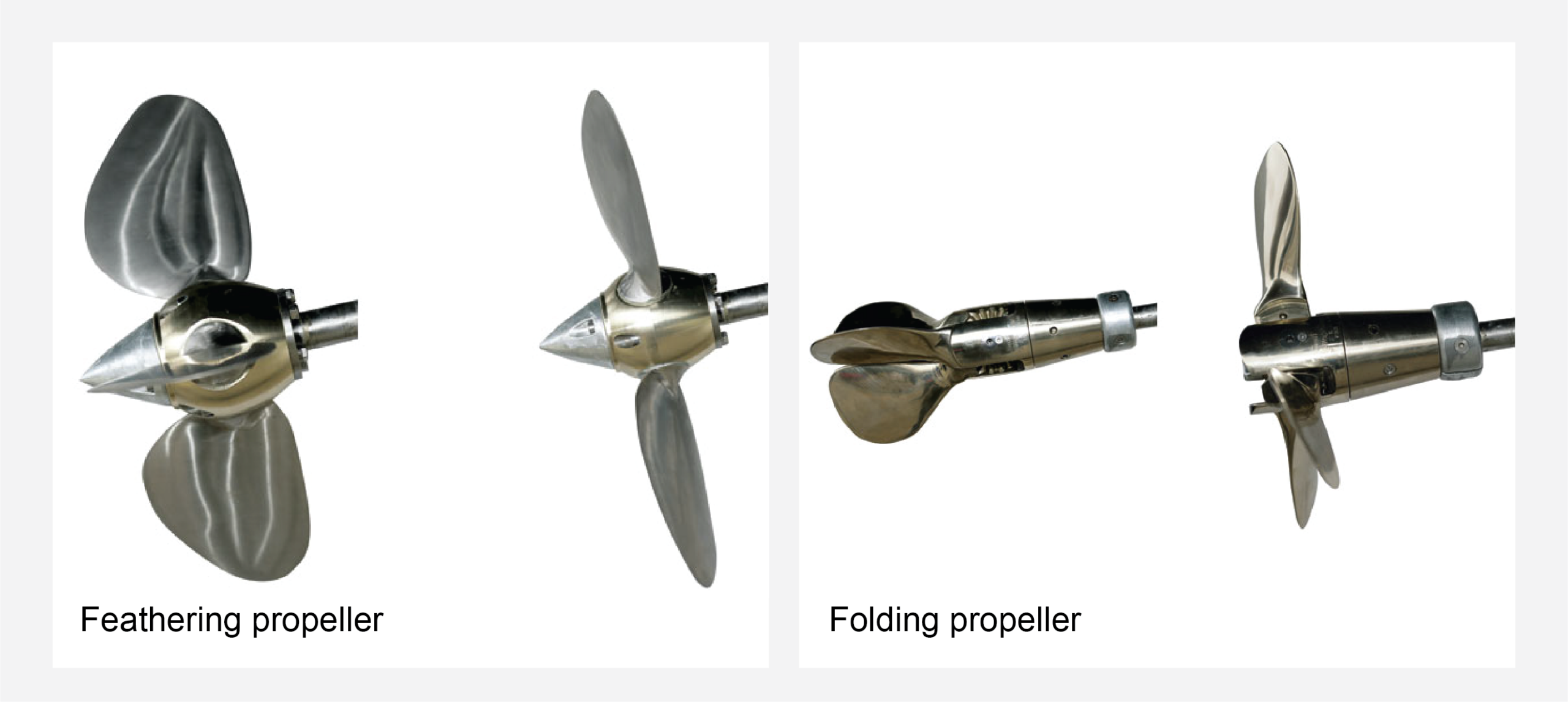
Feathering propellers use flat, paddle-like blades that rotate, or “feather”, to align with the water flow when sailing.
Folding propellers feature curved, hydrodynamic blades that fold back when not in use.
That design difference has a big impact on performance.
Why Choose a Folding Propeller?
In most cases, folding propellers deliver higher overall efficiency than feathering alternatives.
Because they use twisted, curved blades, folding propellers provide smoother and more consistent performance across the entire RPM range. Feathering propellers tend to perform best only at a specific, pre-calculated operating point.
Key advantages of folding propellers:
- Lower drag under sail for improved sailing performance
- Greater efficiency across RPM ranges
- Simpler design with fewer moving parts
- Reduced maintenance requirements
- No need for shaft modifications or adjustments
Where Feathering Propellers Still Have an Edge
Feathering propellers can provide strong manoeuvring performance, particularly at low speeds, because their blades maintain full diameter as they rotate on the hub.
They do offer adjustable pitch, which can be useful in certain applications. However, when a folding propeller is correctly specified for your boat, pitch adjustment is typically unnecessary.
Feathering designs also gained popularity during the 1980s racing era when rating rules favoured their performance characteristics. At the time, folding propellers were more limited in size and blade options, making feathering systems the preferred choice for higher-powered vessels.
Modern folding propellers have since evolved significantly, closing and often surpassing that gap.
Why Choose a 3-Blade GORI Folding Propeller?
Not all folding propellers are created equal, and the GORI 3-Blade Folding Propeller stands in a class of its own.
Designed for sailors who demand performance both under sail and power, the GORI 3-blade system delivers a unique combination of efficiency, control, and innovation.
A key advantage is its ability to operate with the same pitch in both forward and reverse. This is achieved through blades that rotate 180 degrees, ensuring consistent and predictable performance in all conditions.
Key performance advantages:
- Superior stopping power when manoeuvring in tight spaces
- Improved control and responsiveness in reverse
- More efficient and consistent power transfer under load
Unlike most folding propellers that rely on high engine RPM to open in reverse, the GORI 3-blade design deploys smoothly without excessive revs. This improves safety, low-speed handling, and overall responsiveness.
Additional GORI advantages include:
- Exceptionally low drag under sail for improved sailing performance
- No free-spinning when folded, removing the need for a shaft brake
- Optional overdrive (second pitch) for improved cruising efficiency and reduced fuel consumption
The result is a propeller designed for efficiency, control, and reliability in every condition on the water.
Propeller Design: Sailboats vs Powerboats
Propeller design depends heavily on vessel type, and getting it right is essential for performance and efficiency.
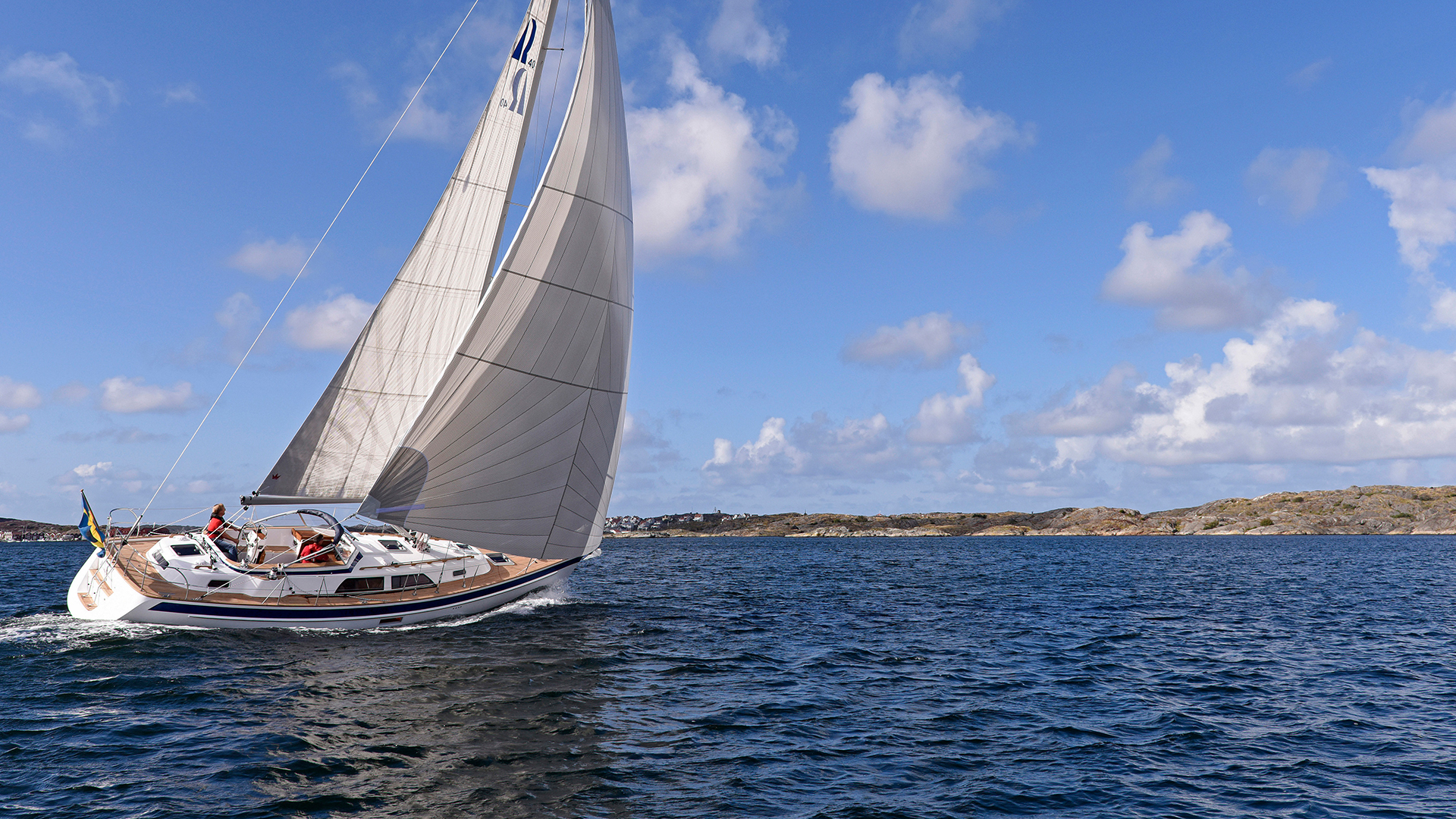
Sailboats
On sailboats, efficiency comes from maximising propeller diameter while maintaining an ideal diameter-to-pitch ratio, typically between 65 and 85 percent.
Key points:
- Hull speed is determined by waterline length, not engine power
- Around 6 horsepower per ton is generally needed to reach hull speed
- Optimal shaft speeds sit between 1000 and 1500 RPM
- Larger, slower-turning propellers are more efficient
In practice:
- 2-blade propellers are most efficient up to around 30 HP
- 3-blade propellers are used for higher power to reduce cavitation
- 4-blade propellers are only required when clearance or power demands make them necessary
Powerboats
Powerboats operate differently, relying on higher shaft speeds, smaller diameters, and increased blade area. Many configurations use 3 to 5 blades to manage higher horsepower.
As speed increases, cavitation becomes more of a challenge, requiring additional blade surface area to maintain efficiency and control.
Repowering Pitfalls
A common issue occurs when upgrading older engines without adjusting the gearbox ratio.
Replacing a low-RPM engine with a modern high-RPM engine can cause the shaft to spin too fast, leading to an undersized propeller. The result is reduced efficiency and an inability to fully transfer available horsepower into the water.
More power on paper does not always translate to better performance on the water.
Correct Propeller Sizing Matters
Regardless of vessel type, correct propeller sizing is critical.
A properly matched propeller should allow the engine to reach maximum RPM within plus or minus 5 percent. Outside of this range, performance, efficiency, and engine longevity can all be negatively affected.
A Smarter Choice for Modern Sailing
While both folding and feathering propellers have their place, modern folding designs, particularly 3-blade systems, offer an excellent balance of efficiency, performance, and simplicity.
For many boat owners, they remain one of the most effective solutions for reliable sailing and motoring performance.
Choosing the right propeller is just as important as choosing the right engine. The correct setup ensures better performance, improved efficiency, and a more enjoyable time on the water.
If you are considering upgrading or repowering your vessel, speak with a qualified dealer to ensure you get the right propeller for your boat and how you use it.